Why compare traffic noise before choosing a neighbourhood?
How road noise affects sleep and daily comfort
Road noise can matter most at night, when background sound drops. The sources consulted do not quantify sleep effects, so check the night-time traffic pattern on each street rather than assuming it. The Lnight indicator, one of the two indicators (with Lden) used in the 2020 Toronto Metropolitan University (Ryerson) study of London, Kitchener and Markham, measures night-time exposure separately from the daytime figure. A neighbourhood with moderate daytime traffic can still be a poor choice if the main arterial road carries heavy night traffic. Daytime effects are more about concentration, phone calls and the ability to use balconies or open windows in warm months.
The hidden cost in rent or purchase decisions
Noise rarely appears in listing descriptions, so its cost is usually absorbed later through lower sleep quality, extra spending on double glazing or ventilation, or a shorter tenancy. When comparing two units at similar prices, check whether the rear-facing rooms are quieter than the street-facing ones, since a bedroom at the back of a building can differ markedly from a living room on a main road. For buyers, the same logic applies to resale: a home on a busy road may be harder to sell at a comparable price to one a block away on a residential street. The official sources consulted do not quantify this price difference, so it should be verified with local sales records rather than assumed.
Choosing between similar-priced neighbourhoods with different noise
When two neighbourhoods have similar prices but different noise profiles, compare them on the same criteria:
| Check | Why it matters |
|---|---|
| Main roads and their position relative to homes | Determines whether noise reaches bedrooms or only the street front |
| Night-time traffic pattern | Night exposure is especially relevant for sleep |
| Building orientation and glazing | Affects how much outside noise enters the home |
| Noise by-law coverage of road traffic | Most Canadian municipalities have noise by-laws that cover road traffic, according to Health Canada; check your own municipality’s by-law. |
How loud is too loud? Reference thresholds
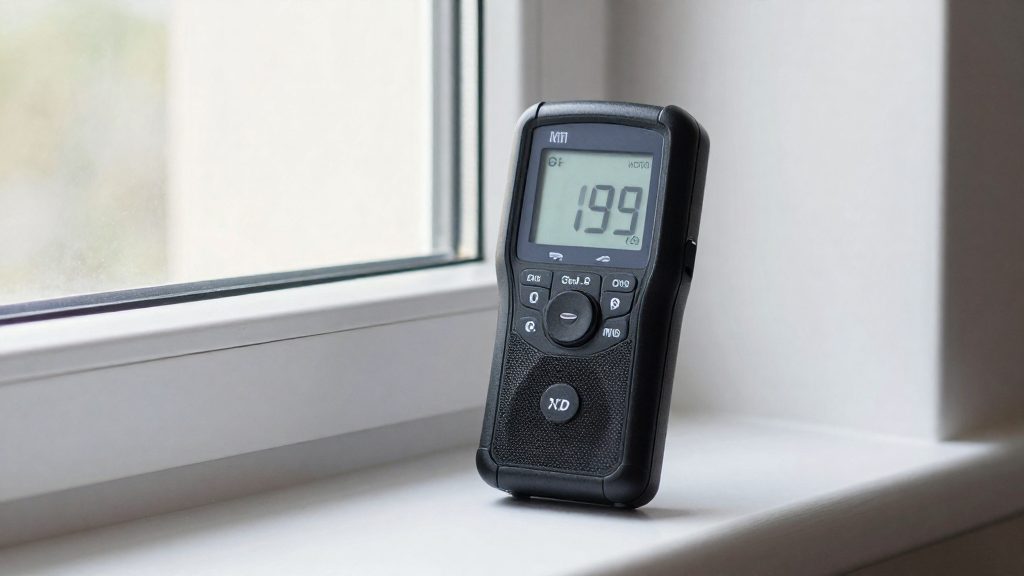
Judging whether road noise in a neighbourhood is excessive depends on which indicator a reading uses and which reference level it is compared against. The two indicators in use are Lden, a day-evening-night average that adds penalties for evening and night periods, and Lnight, which measures night-time exposure alone. The study compared exposure with guidelines from the World Health Organization (WHO) and the Ontario Ministry of the Environment and Climate Change (MECP). The official sources consulted do not give the numeric guideline values, so this section explains how to read indicators rather than giving a decibel threshold.
To assess a neighbourhood, use this method:
- Confirm the indicator behind each noise figure. Lden and Lnight readings cannot be compared with each other or with a single-event level.
- Match the reading to the guideline for the same indicator, from either the WHO or the MECP, and keep the reference body named.
- Check the measurement basis. Maximum façade noise describes the loudest point on a building’s exterior, not the average level inside a dwelling.
Ontario evidence
According to Toronto Metropolitan University (2020), road traffic noise was modelled for London, Kitchener and Markham, Ontario, using both Lden and Lnight. The author identifies the use of maximum façade noise levels as a limitation of the exposure assessment.
The study found that, in modelled results, over 80% of the population in each of the three Ontario study areas is exposed to noise above WHO and MECP guidelines for both Lden and Lnight. These results rely on maximum façade noise levels, so they show widespread modelled exposure rather than a ranking, and they cannot set an absolute noise level for one street.
Health Canada guidance on road traffic noise
According to Health Canada (Noise management in Canada, page consulted), the page gives no decibel figures for road traffic noise, so it cannot serve as a neighbourhood threshold. For numeric values, consult the WHO and MECP guideline publications for the indicator that matches your reading.
Who regulates road traffic noise in Canada?
Road traffic noise in Canada is addressed mainly at municipal level. According to Health Canada (Noise management in Canada, page consulted), most Canadian municipalities have noise by-laws that cover road traffic. Federal rules cover a narrow group of vehicles.
At the federal level, Transport Canada sets noise and vibration requirements for commercial motor vehicles that operate across interprovincial and international borders. These requirements apply to that category of vehicle, not to passenger cars or to traffic in general.
| Authority | Scope | Road traffic noise rules |
|---|---|---|
| Municipalities | Most cities and towns, through noise by-laws | Cover road traffic; the official sources consulted do not specify the content of individual by-laws |
| Transport Canada | Commercial motor vehicles crossing provincial or international borders | Noise and vibration requirements for those vehicles |
The boundary of federal authority is the main gap. The official sources consulted do not specify which rules apply to commercial vehicles that operate only within a single province. For general road traffic, a comparison of streets depends on the local by-law and on the measurements available for each location rather than on a national standard.
To work out which rules apply to a given address, start with the municipal website and search for the noise by-law, then confirm whether it addresses road traffic and how it is enforced. Municipal bylaw offices can clarify scope for a specific street.
How do noise levels differ between neighbourhoods?
Noise can vary within a neighbourhood, so a district’s name tells you little about its sound environment. Three measurable factors drive the difference: the class of the nearest road, the traffic on it, and the distance and orientation of the home relative to that road. The official sources consulted do not give decibel figures for road traffic noise by neighbourhood type, so the approach below is a method you can apply to any pair of addresses.
Road class is the first filter. Arterial roads carry through traffic at higher speeds and volumes, while residential streets serve local access. Compare an arterial frontage with a residential street a few blocks away, not two neighbourhoods averaged together, because one neighbourhood often contains both.
Traffic volume and speed limits work together. Check the traffic counts published by the municipality where they exist, and check the posted speed limit on each street, since a higher limit can raise noise even at moderate volumes. The official sources consulted do not specify volume thresholds, so avoid relying on a single cut-off value.
Setback and façade orientation determine what reaches the home. Distance from the road edge and whether bedrooms face the street or a rear courtyard both change exposure. The most exposed face of a building sets the result, not the average across the whole dwelling, so treat façade-based results as an upper bound for the interior.
Where can you find noise maps for your city?
The official sources consulted do not describe a single national noise map series for Canadian cities. Road noise information usually sits at the municipal level. Your search should start with the city’s open data catalogue and the planning or environment department pages, where road noise layers are published when they exist.
Municipal open data portals
Search the catalogue for terms such as “noise”, “road traffic”, “traffic volume” or “environmental”. Road noise data is often stored as GIS files (shapefile, GeoJSON or a web map service) that you can preview in the portal’s map viewer or open in free GIS software. Check the layer type before using it:
- Polygon layers show noise bands across an area, which suits neighbourhood comparisons.
- Point layers show individual measurement or model points, which suit a single street or building.
If no noise layer appears, the city may publish the study behind its noise by-law as a planning or environmental report.
Modelled versus measured maps
A road noise map can be modelled or measured. A modelled map calculates levels from inputs such as traffic counts, road geometry and building positions. A measured map is based on sound-level readings taken at set locations or during surveys. The two produce different results for the same street, so a comparison is only valid when both neighbourhoods were mapped the same way.
Method also determines what the map describes. A façade-based map describes noise at the building wall, not necessarily in a garden or on the quieter side of a home.
Checking the map year, method and indicator
Record these three details before comparing any two maps:
| Check | Where to find it | Why it matters |
|---|---|---|
| Map year | Portal metadata or report cover date | Maps built on older traffic counts may not reflect newer roads or traffic changes |
| Method | Methodology section or metadata notes | Modelled and measured results, and façade and free-field levels, are not directly comparable |
| Indicator | Legend or methodology section | Maps reporting different noise metrics cannot be ranked against each other |
How to check a street yourself
Judging road noise on a specific street means visiting it at several times of day and recording what you hear and measure.
Time-of-day visits
| Visit | What to observe | Why it matters |
|---|---|---|
| Peak commute period | Traffic density, queuing, horn use | Shows the busiest traffic load |
| Late evening | Remaining traffic, night deliveries, nightlife | Shows whether noise persists when daytime activity ends |
Recording levels with a smartphone app
- Use a sound-level meter app on a phone and hold it at roughly the height of a window, the position where a resident would hear it.
- Take several readings at each visit, noting the time and location, rather than relying on one number.
- Record the peak values as well as the typical level, since brief loud events can matter.
- Phone apps are not calibrated instruments. Use the readings to compare streets against each other under the same conditions, not as absolute measurements.
Logging specific noise sources
Write down each occurrence during the visit:
- Heavy vehicles: trucks and their frequency.
- Buses: stop locations and departure frequency on the street.
- Sirens: emergency vehicle passages, which can be sporadic and easy to miss in a single visit.
What to ask when visiting a home
Questions to sellers, landlords and neighbours cover what a single viewing misses.
Past complaints
Ask the seller or landlord whether anyone has filed a past complaint about noise from the street, a nearby business or the building itself. Ask neighbours the same question directly, and ask how the noise changes between weekday mornings, evenings and weekends.
Works and planned road projects
Ask whether road widening, resurfacing, new transit lines, or construction sites are planned near the property. Ask neighbours whether works have already affected the street. Ask for documented levels rather than accepting a general description.
Window glazing and insulation
Ask for the glazing specification of the windows on the street side. Useful answers include the glazing type (single, double or triple), the frame material, and the date of any replacement. Ask whether walls and roof were insulated and whether the seller holds a document stating an acoustic performance rating. Treat a statement such as “soundproofed” without a written rating as unverified. The sources consulted do not provide glazing ratings, so the figures themselves must come from the seller’s documents.
| Item | Question to ask | What to request |
|---|---|---|
| Glazing type | Are street-side windows single, double or triple glazed? | Installer invoice or specification |
| Frame material | What material are the window frames made of? | Product documentation |
| Replacement date | When were the street-side windows last replaced? | Works certificate or invoice |
| Wall and roof insulation | Were walls and roof insulated, and when? | Works records |
| Acoustic rating | Is a written acoustic performance rating available? | Manufacturer’s documentation |
Bedroom orientation
Ask which rooms face the street and where the bedrooms are located. Check the floor plan rather than relying on memory of the viewing. A bedroom on the rear elevation can experience different conditions from the front of the building.
Frequently asked questions
Is there a decibel level that tells me a neighbourhood is too noisy?
The official sources consulted do not give numeric guideline values for road traffic noise, and the Health Canada page gives no decibel figures for it. Treat any single decibel reading you find online with caution until it is matched to a named noise indicator and a specific guideline.
Which noise indicator should I look at when comparing streets?
The 2020 Toronto Metropolitan University (Ryerson) study modelled two indicators, Lden and Lnight, for London, Kitchener and Markham in Ontario. Lnight isolates night-time exposure, so a street with moderate daytime traffic can still score worse if its night traffic is heavy, although the sources consulted do not quantify sleep effects.
Does a municipal noise by-law protect me from road traffic noise?
Health Canada reports that most Canadian municipalities have a noise by-law that covers road traffic, but the official sources consulted do not describe what those by-laws require. Transport Canada’s noise requirements apply to commercial motor vehicles operating across provincial or international borders, so check the by-law of the specific municipality before assuming any limit applies to the street you are considering.